How Many People Have Dyslexia? A Careful Look at the Numbers
How many people have dyslexia? The most useful short answer is that dyslexia is common, but the exact number depends on how researchers define and measure it. A cautious estimate often places dyslexia around 5% to 10% of the population, while broader estimates that include people with dyslexia-related reading and spelling traits often reach 15% to 20%. In everyday language, that means somewhere between about 1 in 20 and 1 in 5 people may be affected. If you are trying to make sense of a child's reading struggles or your own lifelong reading pattern, a calm dyslexia screening starting point can help you organize observations before seeking a formal professional evaluation.

The Short Answer: Dyslexia Is Common, But Estimates Vary
Dyslexia is usually described as an unexpected difficulty with accurate or fluent word reading, spelling, and decoding. It is not a measure of intelligence, effort, or motivation. Many people with dyslexia are bright, creative, and capable learners who need different reading supports.
The reason the prevalence number changes is that different sources count different things. A narrow research definition may count only people whose reading scores fall well below a strict cutoff. A broader educational definition may include people with persistent signs of dyslexia who benefit from structured reading support but may never receive a formal label. Public awareness sources often use the broader "1 in 5" framing because it captures the large group of people with reading-related learning differences.
A practical way to read the numbers is this:
- 5% to 10% is a conservative range for more narrowly defined dyslexia.
- 10% is a common middle estimate used in global awareness discussions.
- 15% to 20% is a broader range for dyslexia traits or language-based learning difficulties.
- 1 in 5 is best understood as a broad awareness estimate, not a precise count for every country or age group.
This distinction matters. If you use the strictest definition, the answer looks smaller. If you include people who have never been formally evaluated but show meaningful reading and spelling difficulty, the answer gets larger.
How Many People Have Dyslexia in the World?
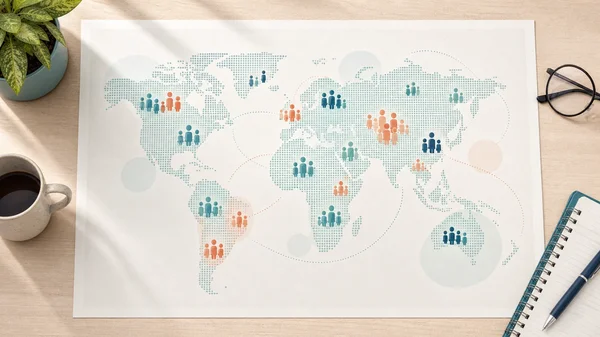
Using a rounded 2026 world population of about 8.3 billion people, the global estimate changes depending on the percentage used:
| Estimate used | Approximate global number |
|---|---|
| 5% | about 415 million people |
| 10% | about 830 million people |
| 15% | about 1.25 billion people |
| 20% | about 1.66 billion people |
For most informational searches, the cleanest answer is this: about 830 million people worldwide may have dyslexia if you use the common 10% estimate. If you use the broader 15% to 20% range for dyslexia-related traits and language-based learning difficulties, the number could be well over 1 billion.
That does not mean every person in the larger estimate has received a formal evaluation. Many people grow up compensating, avoiding reading-heavy tasks, or assuming they are simply "bad at spelling." In countries where literacy screening, specialist support, or school-based evaluation is limited, many people are never identified.
How Many People in the United States Have Dyslexia?
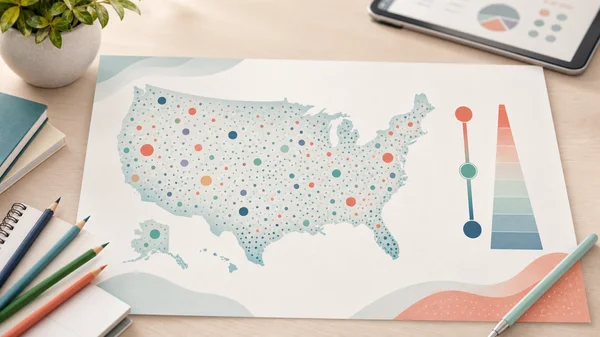
The United States has a population of roughly 342 million people in current Census-based estimates. Applying the same ranges gives a wide but useful picture:
| Estimate used | Approximate U.S. number |
|---|---|
| 5% | about 17 million people |
| 10% | about 34 million people |
| 15% | about 51 million people |
| 20% | about 68 million people |
So, how many people in the U.S. have dyslexia? A conservative answer is tens of millions. A broad "1 in 5" estimate would place the number near 68 million people, while a middle 10% estimate would be closer to 34 million.
For families, the exact national number is less important than the pattern in front of them. If a child reads much more slowly than expected, avoids reading aloud, struggles with spelling, or has trouble connecting sounds to letters, an educational dyslexia risk screening may help clarify whether the next step should be closer observation, school conversation, or professional evaluation.
Is 1 in 5 People Dyslexic?
"1 in 5 people are dyslexic" is a common and memorable statement, but it needs context. It is most accurate as a broad awareness phrase that includes people with dyslexia-related traits and language-based learning differences. It is less precise if someone is asking for a strict research prevalence rate.
Think of it like a wide screening lens. The 1 in 5 figure says that reading and language-based learning difficulties are common enough that every classroom, workplace, and community is likely to include people who need different supports. It should not be used to assume that every fifth person has the same profile, the same support needs, or the same history.
The safest interpretation is:
- Dyslexia is not rare.
- Many people are unidentified.
- The rate depends on definitions, testing criteria, language, and access to evaluation.
- A person's support needs should be based on their actual reading, spelling, writing, and learning profile.
Dyslexia Rates by Country: Why They Are Hard to Compare
People often search for dyslexia rates by country, hoping for a neat ranking. In reality, country-to-country comparisons are difficult. Languages differ in how consistently letters represent sounds. School systems differ in when they screen children, how they define learning disabilities, and how easy it is for families to access specialist evaluation.
For example, English has many irregular spelling patterns, so reading and spelling difficulties may become visible in different ways than they do in languages with more consistent sound-letter rules. In some writing systems, certain reading difficulties may be less obvious in early grades but still affect fluency, spelling, writing, or academic confidence.
Reported rates can also reflect access, not just biology. A country with strong school screening may appear to have more dyslexia because more students are identified. A country with limited services may appear to have less dyslexia because fewer people are counted.
This is why a single global percentage should be treated as an estimate rather than a final truth. Dyslexia exists across languages and cultures, but measurement methods shape the numbers we see.
How Many People Have Dyslexia and ADHD?
Dyslexia and ADHD are different conditions, but they can overlap. Dyslexia mainly affects reading-related skills such as decoding, spelling, and fluent word recognition. ADHD mainly affects attention, impulse control, activity level, planning, or self-regulation. A person can have one, both, or neither.
Because attention can affect reading practice and reading difficulty can affect attention during schoolwork, the two can be confused. A child who avoids reading may look inattentive because the task is difficult. A child with attention difficulties may read inconsistently because sustaining focus is hard. When both patterns are present, support often needs to address both reading instruction and attention-related learning needs.

You may see rough claims that a substantial minority of people with dyslexia also have ADHD, sometimes around one-third. Treat those numbers as broad estimates rather than a rule. The better question is not only "how many people with dyslexia have ADHD?" but "which difficulties are showing up, in which settings, and what support would reduce the barrier?"
What the Numbers Mean for Parents, Adults, and Educators
Statistics can normalize the concern, but they do not tell you what is happening for one learner. The next step is to compare the person's pattern against common dyslexia signs while keeping the tone low-pressure and practical.
For children, signs may include trouble rhyming, difficulty learning letter sounds, slow reading progress, frequent spelling errors, guessing at words from context, avoiding reading aloud, or needing much more effort than peers. In older students and adults, signs may include slow reading, poor spelling, difficulty taking notes quickly, fatigue during reading-heavy tasks, or a long history of feeling smart in discussion but weaker on paper.
Here is a simple observation checklist:
- Is the reading difficulty persistent, not just tied to one hard book or one stressful week?
- Is spelling much harder than oral vocabulary or general reasoning?
- Does the person understand stories better when listening than when reading independently?
- Is there a family history of reading, spelling, or language-based learning difficulty?
- Does extra practice help only a little unless instruction is structured and explicit?
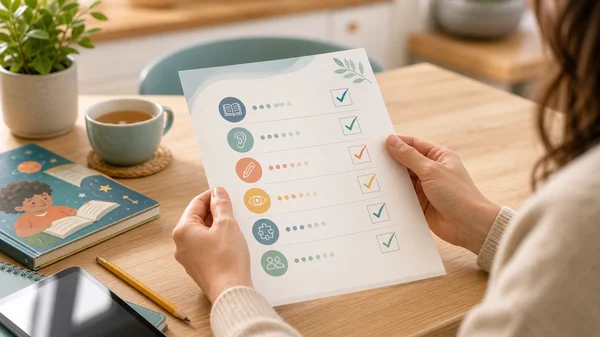
If several of these patterns fit, it may be worth gathering schoolwork samples, teacher observations, reading history, and notes about what helps. A screening result can organize those observations, but a full educational or clinical evaluation is the route for formal identification and accommodations.
Famous People With Dyslexia and Why That Should Not Distract From Support
Searches about famous people with dyslexia are popular because they make the topic feel less frightening. Public figures in business, science, entertainment, sports, and the arts have spoken about reading difficulties and different learning styles. Their stories can be encouraging, especially for children who feel ashamed.
Still, celebrity examples should be used carefully. Dyslexia is not a shortcut to exceptional talent, and it does not affect everyone in the same way. Some people with dyslexia become high-profile innovators. Others simply want reading, school, or work to feel less exhausting. Both experiences deserve respect.
The better takeaway is that dyslexia does not define intelligence or future potential. With the right instruction, accommodations, technology, and emotional support, many people with dyslexia build strong skills and confidence.
What to Do If the Statistics Feel Personal
If you searched "how many people have dyslexia" because the numbers suddenly sound like your child, student, or yourself, start with observation rather than panic. Dyslexia is common, support is available, and early attention can reduce frustration.
A reasonable next step is to write down specific examples: reading speed, spelling patterns, letter-sound confusion, avoidance, fatigue, school feedback, and family history. Then decide whether you need a teacher conversation, a school support meeting, a specialist evaluation, or an educational free dyslexia screening resource to help organize what you are seeing.
The key is not to chase a number for its own sake. The value of dyslexia statistics is that they remind us a struggling reader is not alone. If millions of people share similar patterns, then the answer should not be blame. It should be clearer support, better instruction, and a calmer path toward understanding.
FAQ
Is 1 in 5 people dyslexic?
It can be a useful broad awareness estimate, especially when discussing dyslexia-related traits and language-based learning differences. For stricter research definitions, estimates are often lower. The safest wording is that dyslexia is common and may affect somewhere from about 5% to 20% of people depending on criteria.
How many people have dyslexia in the world?
Using a common 10% estimate and a rounded 2026 world population of about 8.3 billion, about 830 million people worldwide may have dyslexia. Broader estimates that include dyslexia-related traits can be higher.
How many people in the United States have dyslexia?
Using a U.S. population near 342 million, a 10% estimate suggests about 34 million people. A broader 20% estimate would be closer to 68 million. The real number depends on definitions, age group, and how many people have been formally evaluated.
How do people manage dyslexia?
People with dyslexia often benefit from structured literacy instruction, explicit phonics support, assistive technology, audiobooks, extra time, writing tools, and supportive school or workplace accommodations. Emotional support matters too, because repeated reading difficulty can affect confidence.
Who can formally identify dyslexia?
Formal identification is usually handled by qualified professionals such as educational psychologists, neuropsychologists, specialist teachers, or school evaluation teams, depending on the country and school system. Online screening can be a helpful first step, but it is not the same as a full evaluation.
Am I dyslexic or ADHD?
Dyslexia and ADHD can look similar during reading tasks, but they are different. Dyslexia is more connected to reading, spelling, decoding, and word recognition. ADHD is more connected to attention, self-regulation, planning, and impulse control. Some people have both, so a broad evaluation may be useful when both patterns appear.
How early can the signs of dyslexia be spotted?
Some early signs can appear before formal reading instruction, such as difficulty rhyming, delayed speech, trouble remembering letter names, or problems connecting sounds with letters. Early signs do not prove dyslexia, but they can show when a child may need closer monitoring and early literacy support.