Dyslexia School Transitions: A Complete Educational Guide for Parents and Educators
Educational transitions are major milestones in any student's life. For children with dyslexia, these changes can feel like overwhelming mountains to climb. Whether your child is moving from the nurturing environment of elementary school to the fast pace of middle school, or preparing for the independence of college, each step requires a unique map. These pivotal moments are not just challenges; they are opportunities for growth and self-discovery. With the right planning and support, your child can navigate these shifts with confidence and success.
The key to a smooth transition is understanding your child's specific reading and learning profile. Early identification and ongoing support are the foundations of educational achievement. If you are at the beginning of this journey or facing a new school level, you can start your test today to get a clearer picture of your child's needs. This comprehensive guide provides parents and educators with practical strategies and expert insights to navigate every critical transition from childhood to early adulthood.
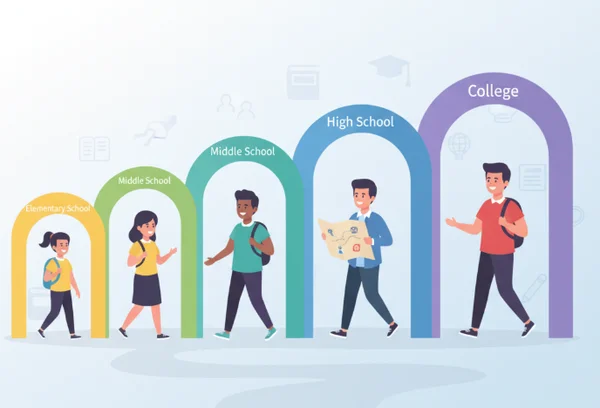
Elementary to Middle School Transitions
The move to middle school is often the most significant shift in a young learner's life. In elementary school, the focus is on "learning to read." By middle school, this shifts to "reading to learn." This transition requires greater independence and a heavier workload. For a child who still struggles with decoding text, the sudden increase in reading across subjects like history and science can be daunting.
Preparing Your Child for Academic and Social Changes
Middle school brings a new structure where students move between different classrooms and manage multiple teachers. This change can be difficult for students with dyslexia who may struggle with organization or "executive function." For instance, a student might feel overwhelmed by the simple task of remembering a locker combination while also trying to get to a science lab on the other side of the building.
To prepare, start practicing organizational habits at home. Use color-coded folders for different subjects and digital planners to track assignments. Socially, middle school is a time when children become more aware of their peers. A student who struggles with reading may feel self-conscious or anxious. Talk openly with your child about how their brain works. Remind them that dyslexia is a different way of processing information, not a measure of intelligence. Building their self-esteem at home helps them face the social pressures of a new school environment.
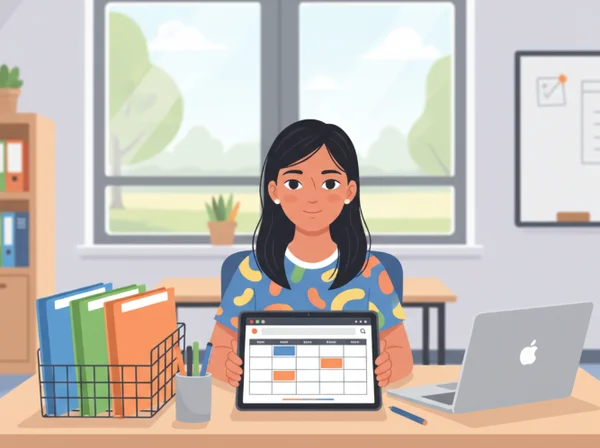
IEP and 504 Planning for Middle School Success
Your child’s Individualized Education Program (IEP) or 504 Plan must evolve as they enter middle school. What worked in third grade might not be enough for sixth grade. Before the school year begins, schedule a meeting with the new school's special education coordinator. Ensure that all accommodations are clearly defined for a multi-teacher environment.
Key accommodations to discuss include:
- Access to audiobooks for heavy reading assignments.
- The use of speech-to-text software for writing tasks.
- Extended time on tests and quizzes in all subject areas.
- Permission to use a laptop for note-taking.
If you are currently evaluating if your child needs these formal supports, you can try our tool to identify specific areas where they might be falling behind their peers.
Building Self-Advocacy Skills Before the Transition
Self-advocacy is the ability to speak up for what you need. In middle school, your child will not have one teacher watching over them all day. They need to learn how to tell a teacher, "I have dyslexia, and I need the guided notes for this lesson."
Start small by encouraging your child to participate in their IEP meetings. Let them describe what helps them learn best. When a student understands their own learning style, they feel empowered rather than defeated. This skill is the secret weapon for long-term academic success. Practice these conversations at home so they feel natural when the student is standing in front of a teacher's desk.
Middle School to High School Navigation
High school marks the gateway to adulthood. Academic demands increase, and standardized testing pressure begins to loom. For dyslexic students, this requires balancing challenging coursework with appropriate support systems. A student might excel in a hands-on physics experiment but feel paralyzed when asked to write a five-page lab report based on the same data.
High School Accommodation Strategies
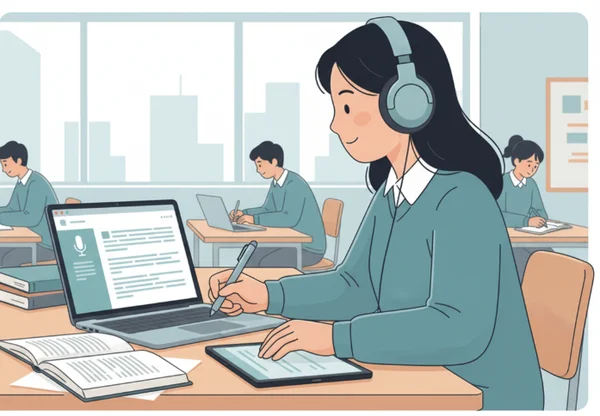
In high school, the volume of text increases significantly. Students are expected to read complex literature and dense textbooks. Accommodation strategies should focus on efficiency. High-speed scanners, "smart pens" that record lectures, and advanced spell-checking software are essential tools.
It is also important to ensure that accommodations are used consistently. Sometimes, teenagers want to "fit in" and may stop using their tools because they don't want to look different. Parents should work with the school to ensure that using an online dyslexia test or assistive technology is seen as a standard part of their learning toolkit. It is no different than a person wearing glasses to see better or using a calculator for complex math.
Standardized Testing Considerations for Dyslexic Students
Tests like the SAT, ACT, or state-level exit exams can be a major source of anxiety. However, students with documented dyslexia are often eligible for accommodations on these national tests. This can include 50% or even 100% extra time, a reader, or a scribe.
The application process for these accommodations takes time. You often need to submit several years of documentation. Start this process early in your child's sophomore year. Having the right support during these high-stakes exams ensures that their scores reflect their actual knowledge, not just their reading speed.
Course Selection for Strength-Based Learning
Dyslexic students often have incredible "out-of-the-box" thinking skills. When choosing high school courses, look for a "strengths-based" approach. If your child excels in art, engineering, or computer science, ensure their schedule includes these subjects.
Success in an area of strength can provide the emotional fuel needed to tackle difficult English or history assignments. High school should be a time to explore potential career paths. Many dyslexic individuals find they are naturally gifted in fields that require spatial reasoning and creative problem-solving. Balancing a difficult literature class with a high-interest robotics or graphic design course can keep a student motivated.
High School to Post-Secondary Pathways
The transition out of high school is the final step toward independence. Whether the goal is a four-year university, a trade school, or entering the workforce, planning should begin early. Students must transition from being "supported by the system" to "managing their own support."
Finding Dyslexia-Friendly Colleges
Many colleges now offer robust support programs for students with learning differences. When visiting campuses, look for the Office of Disability Services. Ask specific questions about the availability of assistive technology and tutoring. Some colleges have specialized programs designed specifically for dyslexic learners.
Before applying, it is helpful to have an updated screening or assessment. You can check for risk using our online tool to see which areas might need the most focus during college-level studies. Remember that in college, the student is responsible for requesting their own accommodations. Unlike K-12 education, the school will not seek the student out to offer help.
Vocational and Technical School Options
College is not the only path to a successful career. Many students with dyslexia thrive in vocational or technical schools. These programs focus on hands-on learning, which often suits the dyslexic brain's preference for physical and visual tasks.
Fields such as automotive technology, culinary arts, graphic design, and electrical engineering are excellent options. These careers value skills like spatial awareness and practical problem-solving. These pathways often lead to high-paying, fulfilling careers where reading speed is less critical than technical expertise. A master mechanic, for example, uses diagnostic skills that rely heavily on pattern recognition—a common dyslexic strength.
Workplace Accommodations and Career Planning
As students enter the workforce, they should know their rights under the Americans with Disabilities Act (ADA) or similar laws in other countries. Employers are often required to provide "reasonable accommodations." This might include using specialized software or receiving written instructions in a specific format rather than verbal ones.
Career planning should focus on the individual’s unique talents. Many famous entrepreneurs and inventors are dyslexic. Their ability to see patterns that others miss is a massive professional advantage. Encourage your child to see their dyslexia as a "different ability" that can lead to innovation and leadership in the workplace.
Empowering Transitions Through Proactive Planning
Navigating school transitions with dyslexia requires patience, a clear strategy, and a proactive mindset. From the first day of middle school to the first day of a new career, the journey is shaped by thoughtful preparation and understanding. By focusing on self-advocacy, choosing the right accommodations, and highlighting personal strengths, you can turn potential obstacles into stepping stones.
The most important step you can take today is to gain a deep understanding of the challenges at hand. Understanding your child's unique learning profile gives you the power to make informed decisions. It allows you to talk to teachers with confidence and provide your child with the specific tools they need. If you are ready to take that first step toward understanding, we invite you to take the test on our homepage. Together, we can unlock your child's full reading potential and ensure every transition is a success.
Frequently Asked Questions About Dyslexia Educational Transitions
What documentation is needed for dyslexia accommodations in college?
Most colleges require a recent psycho-educational evaluation, usually completed within the last three years. This report should clearly state the diagnosis and recommend specific accommodations. It is also helpful to provide a copy of the student's high school IEP or 504 Plan. To get a head start on understanding what areas might be flagged in an evaluation, you can use our test as a preliminary screening tool.
When should we start planning for post-secondary education?
Transition planning should ideally begin in the freshman or sophomore year of high school. This allows enough time to gather the necessary documentation for standardized tests and to research colleges or vocational programs that offer the right level of support. Early planning ensures that the student can choose high school courses that align with their future goals.
How can I help my child develop self-advocacy skills?
Start by involving your child in every meeting regarding their education. Teach them the vocabulary of dyslexia so they can explain it to others. Practice "role-playing" conversations where they ask a teacher for an accommodation. When a child feels they have a voice in their education, they are much more likely to stay motivated and succeed during difficult transitions.
Can students with dyslexia succeed in STEM fields?
Absolutely. Many individuals with dyslexia excel in Science, Technology, Engineering, and Math. The dyslexic brain is often highly skilled at 3D visualization and complex problem-solving. While the "reading" part of STEM might be challenging, the "thinking" part is often a natural strength. With the right assistive technology for reading and writing, there is no limit to what a dyslexic student can achieve in STEM careers.