Different Types of Dyslexia: Reading Profiles, Signs, and Support
Searching for the different types of dyslexia can be confusing because lists do not all use the same labels. Some articles name four types, others name seven, and some stretch the list to twelve by adding related learning differences. A safer way to understand the topic is to think in reading profiles: patterns of difficulty with sounds, sight words, naming speed, fluency, spelling, visual comfort, or overlapping skills such as math. These profiles can guide better questions, but they are not a substitute for a formal evaluation. If you are trying to decide whether reading struggles deserve closer attention, a free dyslexia screening starting point can help you organize observations before speaking with a qualified professional.

Are There Officially Different Types of Dyslexia?
There is no universally accepted medical list that says every person must fit into one exact dyslexia type. Dyslexia is usually understood as a language-based learning difference that affects accurate or fluent word reading, spelling, and sometimes writing. The pattern can vary widely from one learner to another.
That is why "type" language should be used carefully. It can be useful when it describes a pattern, such as trouble sounding out unfamiliar words or trouble recognizing irregular sight words. It becomes less useful when it suggests that a child or adult has one fixed label forever. Many people show a mixed profile, and the profile can look different as reading demands change across school, college, work, and daily life.
The most practical question is not "Which box does this person belong in?" A better question is "Which reading tasks are hardest, and what support would reduce the strain?"
A Practical Chart of Common Dyslexia Profiles
Here is a plain-English chart of different types of dyslexia language you may see online. Treat it as a guide to common signs, not as a final classification.
| Profile name often used | Main difficulty | Common signs to notice | What support often targets |
|---|---|---|---|
| Phonological dyslexia | Connecting speech sounds with letters | Trouble sounding out new words, weak rhyming, spelling that misses sounds | Phonemic awareness, decoding, structured phonics |
| Surface or orthographic dyslexia | Recognizing familiar written words quickly | Slow sight-word reading, difficulty with irregular words, heavy guessing | Word patterns, morphology, repeated accurate exposure |
| Rapid naming profile | Quickly naming letters, numbers, colors, or objects | Slow reading pace, word-finding pauses, timed work feels harder | Fluency, automaticity, reduced time pressure |
| Double-deficit profile | Both sound processing and naming speed | Very effortful decoding plus slow fluency | Intensive, explicit, multisensory instruction and accommodations |
| Visual processing difficulties | Comfort and accuracy when looking across text | Losing place, visual fatigue, letter confusion, tracking problems | Vision check, layout adjustments, reading aids where appropriate |
| Developmental dyslexia | Lifelong reading difference noticed in childhood or later | Early speech, rhyming, reading, spelling, or fluency struggles | Early identification, school support, structured literacy |
| Acquired reading difficulty | Reading changes after illness or brain injury | New loss of reading skill after a neurological event | Medical care plus specialist rehabilitation |
This chart also shows why search results vary. Some lists count developmental and acquired dyslexia as two broad origins. Others count phonological, surface, rapid naming, double-deficit, visual, and deep dyslexia as subprofiles. Still others add dyscalculia or dysgraphia, which are related learning differences rather than types of dyslexia itself.
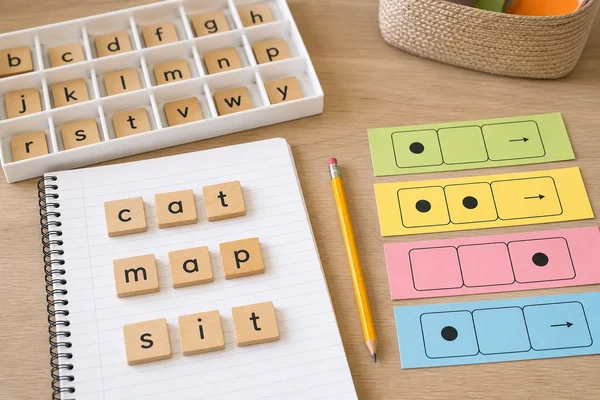
Phonological Dyslexia: Sounds, Decoding, and Spelling
Phonological dyslexia is the profile most people mean when they talk about classic dyslexia. The central difficulty is working with the sound structure of language. A learner may understand a story when it is read aloud but struggle to break an unfamiliar printed word into sounds, blend those sounds, or connect them with letters.
Signs can include difficulty rhyming, trouble remembering letter-sound patterns, slow decoding, inaccurate attempts at new words, and spelling that changes from one line to the next. A child may avoid reading aloud because every new word feels like a puzzle. An adult may read familiar words reasonably well but still stumble over names, technical terms, or unfamiliar vocabulary at work.
Support usually focuses on explicit instruction in phonemic awareness, decoding, spelling patterns, syllables, and meaningful word parts. The key is not more pressure or more guessing. It is clearer instruction, enough practice, and patient feedback that makes the sound-to-print system more predictable.
Surface Dyslexia: Sight Words and Irregular Spellings
Surface dyslexia, sometimes called an orthographic profile, describes difficulty recognizing whole written words quickly and accurately. A learner may be able to sound out simple regular words, yet struggle with words that do not follow the most common sound rules. English has many of these: words such as said, though, one, yacht, and colonel can be frustrating because sounding them out letter by letter does not fully work.
Common signs include slow reading of familiar words, difficulty remembering irregular spellings, guessing from the first letter, and spelling that looks phonetic but not conventional. Reading may be accurate enough on short passages but slow and tiring because the brain is not recognizing enough words automatically.
Helpful support often includes repeated accurate exposure to words, attention to spelling patterns, morphology, and structured practice that connects meaning, pronunciation, and print. For many learners, this profile overlaps with phonological difficulty, so support should look at the whole reading pattern rather than one isolated label.
Rapid Naming and Double-Deficit Profiles
Rapid automatized naming, often shortened to RAN, refers to how quickly someone can name familiar visual items such as letters, numbers, colors, or objects. A learner with a rapid naming profile may know the letters and sounds but retrieve the names slowly. The result can be slow oral reading, pauses, difficulty with timed tasks, and a sense that reading takes much more effort than it should.
Double-deficit dyslexia usually means the learner has both phonological difficulty and rapid naming difficulty. This can make reading especially labor-intensive because the person is working hard at both decoding and fluency. Families sometimes notice that the learner can improve accuracy with support but still reads slowly, tires quickly, or needs more time to finish written work.
This is a good example of why an online dyslexia screening resource should be treated as an observation tool, not a final answer. Screening can help you notice patterns, but a full evaluation can look at decoding, fluency, spelling, language, memory, processing speed, attention, and school or work history together.
Visual Dyslexia, Math Dyslexia, and Other Overlaps
"Visual dyslexia" is a popular search phrase, but it needs careful handling. Some people with reading difficulty also report losing their place, visual fatigue, blurry text, headaches, or difficulty tracking across lines. These experiences are real and worth discussing, but they do not always mean the eyes are the root cause of dyslexia. Reading is a language task as well as a visual task.
If visual discomfort is part of the picture, it is sensible to rule out vision issues with an eye-care professional while also considering reading-related support. Practical adjustments may help: larger spacing, a reading guide, shorter line lengths, audio support, or reduced visual clutter. These do not replace reading instruction, but they can lower the daily load.
"Math dyslexia" is usually a casual way to talk about dyscalculia, a learning difference that affects number sense, calculation, math facts, or mathematical reasoning. Dyscalculia can overlap with dyslexia, and word problems can be especially difficult when reading and math demands appear together. Still, dyscalculia is not simply another dyslexia type. The distinction matters because math support may need its own assessment and teaching plan.
Other overlaps can include dysgraphia, ADHD, language disorder, auditory processing concerns, and anxiety that develops after repeated reading frustration. Overlap does not mean one condition "causes" the other. It means a learner may need a broader support plan.

Different Types of Dyslexia in Adults
Different types of dyslexia in adults often show up less like early reading instruction problems and more like daily efficiency problems. Adults may have learned many coping strategies, so the signs can be subtle: rereading emails several times, avoiding long reports, taking longer to write, misspelling familiar words, mixing up similar names, or feeling drained by dense text.
An adult phonological profile might appear when unfamiliar names, technical terms, or new vocabulary are hard to sound out. A surface or orthographic profile might appear as persistent spelling difficulty and slow recognition of irregular words. A rapid naming profile might show up as word-finding pauses, slow form completion, or difficulty under time pressure. A double-deficit profile may combine several of these patterns and make reading-heavy work feel unusually exhausting.
Adults also bring context. A person may read well enough in a familiar job but struggle when promoted into a role with more documentation. Another may have strong verbal reasoning but avoid written training materials. The goal is not to reduce an adult to a type. It is to identify barriers, use supportive tools, and consider formal evaluation when reading or writing difficulties affect work, school, confidence, or daily life.
Use Dyslexia Type Language as a Starting Point
The most helpful way to use different types of dyslexia is to turn labels into better observations. Instead of asking only whether someone has "visual dyslexia" or "phonological dyslexia," write down what actually happens: Which words are hard? Is reading accurate but slow? Does spelling lag behind ideas? Does the learner lose place on the page? Do math word problems add extra strain?
Then connect those observations to next steps. For a child, that may mean talking with teachers, requesting school support, and asking about a full reading evaluation. For an adult, it may mean exploring assistive technology, asking for reasonable adjustments, or gathering school and work history before meeting a specialist. If you want a private way to organize concerns first, a reading-difficulty screener for reflection can be a calm place to begin. It should be used as a starting point for discussion, not as a replacement for professional guidance.

FAQ
What are the 4 types of dyslexia?
When people ask about four types, they usually mean phonological dyslexia, surface dyslexia, rapid naming dyslexia, and double-deficit dyslexia. These are better understood as common reading profiles than as rigid categories. Many learners show more than one pattern.
What are 5 signs of dyslexia?
Five common signs are slow or inaccurate reading, trouble sounding out unfamiliar words, weak spelling, difficulty with rhyming or speech sounds, and avoiding reading because it feels tiring. In adults, signs may include slow email reading, spelling issues, and needing extra time for written tasks.
What are the 12 types of dyslexia?
There is no single official list of twelve types. Long lists often combine true reading profiles with broad origins, related learning differences, and descriptive phrases such as phonological, surface, visual, rapid naming, double-deficit, deep, developmental, acquired, dysgraphia, dyscalculia, auditory processing, and directional confusion. Some of those are overlaps, not dyslexia types.
How many different types of dyslexia are there?
It depends on the source. A practical article may discuss four to seven common profiles, while a professional evaluation usually focuses on the learner's actual reading, spelling, language, fluency, and processing pattern. The number matters less than the support plan that follows.
Is dyslexia a form of autism?
No. Dyslexia and autism are different neurodevelopmental profiles. They can occur in the same person, but one is not a form of the other. Dyslexia mainly affects reading, spelling, and language-related literacy skills, while autism involves social communication, sensory, behavioral, and developmental differences.
Can dyslexia types change with age?
The underlying learning profile may be lifelong, but its daily impact can change. A child may first struggle with decoding, while an adult may notice slow reading, spelling problems, or fatigue with complex documents. Good support should adjust as reading demands change.