Bilingual Dyslexia Testing: What Parents Need to Know
Is your child struggling with reading in more than one language? You are not alone. Many parents raising bilingual children face a unique challenge: trying to understand if their child's reading difficulties are a normal part of learning two languages or a sign of a potential learning difference like dyslexia. It can be a confusing and worrying time.
Unlike their monolingual peers, bilingual learners can show different patterns of reading difficulty. These can sometimes be misinterpreted as simple language learning hurdles. This guide is here to help you navigate these complexities. We will explore the special considerations for dyslexia testing in bilingual children, helping you understand what to expect and how to find the right support.
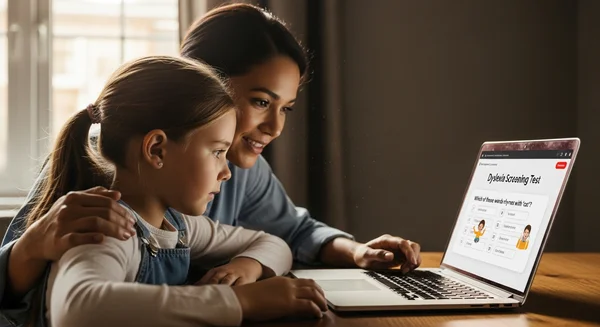
Identifying potential issues early is a crucial first step. Our free online dyslexia screening is designed to help parents get a clearer picture of their child's reading skills. While not a formal diagnosis, it provides valuable insights and can be a great starting point. You can try our free dyslexia test at any time.
Understanding Bilingual Language Development and Reading
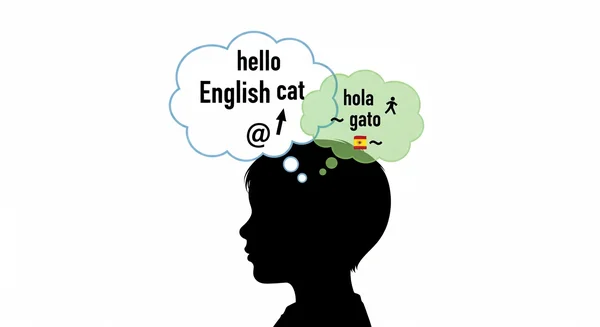
Before diving into testing, it's helpful to understand the unique journey of a bilingual reader. Learning to read in two languages is complex. It requires managing different sounds, letters, and grammatical structures simultaneously. This process can look very different from how a monolingual child learns to read.
Normal Patterns in Bilingual Reading Acquisition
Bilingual children are accomplishing an amazing feat. As they learn, some patterns that might seem concerning are actually quite normal.
- Slower initial word recognition: Bilingual children may be slower to name letters or read words compared to monolingual peers. This is often because their brain is processing two different language systems.
- Language mixing: It's common for bilingual children to mix words or grammar from both languages (known as "code-switching"). This is a natural part of developing fluency, not a sign of confusion.
- Uneven skills across languages: A child might be a stronger reader in one language than the other. This often depends on which language they are more exposed to at home and in school.
- Transfer of skills: Positive transfer occurs when skills learned in one language, like understanding story structure, help with the other language. Negative transfer can happen when a rule from one language (like a specific letter sound) is incorrectly applied to the other.
These are typical aspects of becoming bilingual and biliterate. They do not, by themselves, point to dyslexia.
When Language Learning Crosses into Learning Difference Territory
So, when should you be concerned? The key is to look for difficulties that persist across both languages and are not typical for bilingual learners. True signs of dyslexia are rooted in how the brain processes language, and these challenges often appear regardless of the language being used.
Look for these potential red flags:
- Difficulties with phonological awareness in both languages: This is the ability to recognize and play with the sounds in words (like rhyming or identifying the first sound in "cat"). A child with dyslexia may struggle with this foundational skill in both their native and second language.
- Consistent trouble with decoding: If a child has significant trouble sounding out new words, even simple ones, in both languages, it could be a sign of a deeper issue.
- Poor spelling in both languages: While all children make spelling mistakes, a dyslexic child's errors are often inconsistent and don't improve much with practice. They may struggle with common, phonetically regular words.
- A family history of reading difficulties: Dyslexia often runs in families. If parents or siblings have struggled with reading, the child may have a higher risk.
If you notice these patterns, a screening can help clarify the situation. Taking a dyslexia test for kids can be a valuable step in understanding these challenges.
Special Considerations in Bilingual Dyslexia Assessment
Assessing a bilingual child for dyslexia is not as simple as giving them a standard test. A proper assessment must account for their dual-language background to produce meaningful and accurate results. Without these considerations, a child could be misdiagnosed.
Language Dominance and Its Impact on Testing Results
Language dominance refers to the language in which a child is more proficient. It's not always the first language they learned. A child might have more exposure to English at school and be more dominant in it, even if another language is spoken at home.
Why does this matter for testing?
- Fair Assessment: If a child is tested in their non-dominant language, their skills may appear weaker than they actually are. This could lead to a misdiagnosis of a learning disability.
- Accurate Picture: An evaluator needs to understand the child's full linguistic profile—their history and exposure to each language—to interpret test results correctly.
- Comprehensive Evaluation: Ideally, core underlying skills like phonological awareness should be assessed in both languages. If a weakness appears in both, it is a much stronger indicator of potential dyslexia.
Before any formal testing, the assessor should determine the child's language dominance to ensure the evaluation is fair and accurate.
Assessment Tools: What Makes a Test Bilingual-Appropriate?
Not all tests are created equal, especially for bilingual learners. A good assessment tool should be culturally and linguistically appropriate. Simply translating a test from English is not enough, as languages have different structures and sounds.
Here’s what to look for in a bilingual-appropriate assessment:
- Norms for Bilingual Speakers: The best tests are "normed" on a population of bilingual children. This means your child's score is compared to other bilingual children, not monolingual ones.
- Assessment of Underlying Skills: The evaluation should focus on skills known to be difficult for individuals with dyslexia, regardless of language. These include phonological processing, working memory, and rapid naming.
- Culturally Relevant Materials: Test items, stories, and pictures should be familiar and relevant to children from diverse cultural backgrounds to avoid bias.
- Dynamic Assessment: This approach involves a "test-teach-retest" method. The assessor teaches the child a skill and then sees how they respond. It helps distinguish a true learning difficulty from a lack of exposure or instruction.
If you are just starting to explore this topic, an online screening tool can be a helpful first step. A well-designed online screener can provide initial insights before you commit to a formal, and often costly, evaluation. You can start the test for free on our website.
Navigating the Testing Process for Your Bilingual Child
Feeling ready to take the next step? The process of getting your child assessed can feel overwhelming, but being prepared can make it much smoother. Knowing what to do and what to expect will empower you to be your child's best advocate.
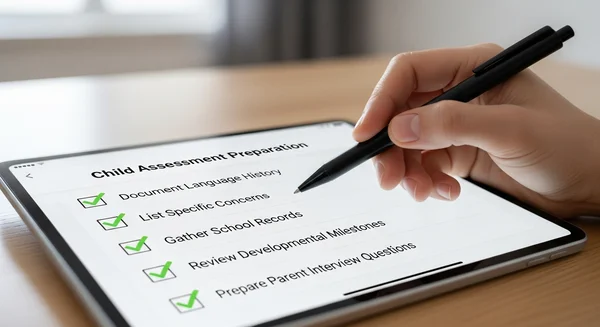
Preparing for Your Child's Assessment: A Parent's Checklist
Gathering information beforehand will provide the assessor with a complete picture of your child's development. Here is a checklist to help you prepare:
-
Document Language History: Write down when and where your child was exposed to each language. Note which language is spoken at home, at school, and with friends.
-
List Specific Concerns: Make a list of the exact reading, writing, or spelling issues you have observed. Include examples if possible (e.g., "struggles to rhyme words," "confuses 'b' and 'd' in both English and Spanish").
-
Gather School Records: Collect report cards, results from school-based tests, and samples of your child's schoolwork.
-
Talk to Teachers: Speak with your child's teachers in both languages, if applicable. Ask for their observations about your child's strengths and weaknesses in the classroom.
-
Record Family History: Note if any family members (parents, siblings, grandparents) have had reading difficulties or were diagnosed with dyslexia.
-
Consider a Preliminary Screening: Using a tool like our free dyslexia test can give you a summary of potential risk areas to share with the professional.
Interpreting Results: What the Scores Mean for Your Bilingual Learner
After the assessment, you will receive a report with various scores and recommendations. This can be full of technical terms, so don't be afraid to ask the assessor to explain everything in simple language.
Here’s what to focus on:
- Look for Patterns: The most important thing is the pattern of scores. An evaluator will look for a specific profile: average or above-average intelligence combined with specific weaknesses in language-based skills.
- Cross-Linguistic Performance: Did the weaknesses appear in both languages? Difficulties with fundamental skills like phonological processing across languages are a strong indicator of dyslexia.
- Strengths and Weaknesses: The report should highlight your child's cognitive strengths as well as their challenges. This is crucial for developing an effective support plan that builds on what they do well.
- Diagnosis vs. Eligibility: A professional may provide a clinical diagnosis of dyslexia. Separately, a school will determine if your child is "eligible" for special education services based on specific criteria. These are not always the same thing.
Understanding the results is the first step toward getting your child the right support to help them thrive academically and personally.
Taking the Next Step for Your Bilingual Child
Recognizing potential dyslexia in your bilingual child is a journey that begins with close observation and leads to proper assessment. With the right approach, you can help your child thrive in both languages. Remember that typical bilingual development includes patterns that can mimic reading difficulties, but persistent, cross-linguistic challenges in core skills like sound processing and decoding are key indicators of potential dyslexia.
Navigating the assessment process can be complex, but you are now equipped with the knowledge to be a confident advocate for your child. A proper evaluation considers their entire linguistic profile, uses appropriate tools, and interprets results within a bilingual context.
Are you ready to take the first, simple step? While a formal evaluation is a comprehensive process, you don't have to wait to gain insight. Take our free online screening tool, which is designed by experts to provide a preliminary look at your child's reading skills. It's a quick, easy, and confidential way to assess potential risk factors and get personalized recommendations.
Start your free test now and unlock your child's full reading potential.

The Takeaway
Can an online dyslexia test accurately identify dyslexia in bilingual children?
An online tool serves as a screener, not a diagnostic test. A good screener, like the one on our site, can effectively identify potential risk factors for dyslexia by evaluating skills known to be challenging for dyslexic individuals. For a bilingual child, it provides a valuable, low-pressure first step. If the screening indicates a potential risk, the next step is a comprehensive evaluation by a qualified professional who specializes in bilingual learners. You can try our free tool to get started.
At what age should I consider testing my bilingual child for dyslexia?
Concerns can arise as early as kindergarten (ages 5-6), when formal reading instruction begins. If a child shows significant and persistent difficulty with pre-reading skills like rhyming, letter-sound knowledge, and phonological awareness in both languages, it's reasonable to seek a screening. Early identification and intervention lead to the best outcomes.
How does bilingualism affect dyslexia intervention strategies?
Bilingualism is a strength! Interventions for bilingual children with dyslexia should be tailored to their needs and can often leverage skills from one language to support the other. Effective strategies will still focus on systematic, explicit instruction in phonemic awareness, phonics, and decoding, but the instructor should be trained to work with bilingual learners. Instruction may be provided in one or both languages, depending on the child's needs and the school's resources.
What should I tell my child's school about their bilingual learning profile?
Be proactive and share as much information as possible. Provide the school with your child's language history, your specific observations, and the results of any screenings or formal evaluations. Emphasize that your child is a bilingual learner and that any assessment of their progress must take this into account. This helps teachers distinguish between language learning needs and a potential learning difference, ensuring your child gets appropriate support.